
Resources
 This feature requires you to be logged in.
Alcohol and other drugs virtual reality resource
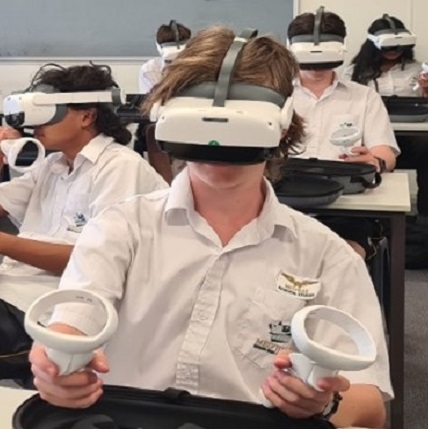
The alcohol and other drugs virtual reality resource educates Year 9 students on the effects of alcohol and other drug (AOD) use on the brain using immersive, novel technology.

Topic: Drug education
Lesson content
The lessons have been designed to:
- reflect best practice alcohol and other drug (AOD) education
- align to the WA Curriculum.
The lessons have applications across various learning areas, including health and science.
Links to Year 9 Syllabus
Health and Physical Education:
- Healthy and active communities
- Impact of external influences on the ability of adolescents to make healthy and safe choices relating to: alcohol and other drug use (ACPPS092)
Science:
- Science Understandings
Biological sciences- Multi-cellar organisms rely on coordinated and interdependent internal systems to respond to changes in their environment (ACSSU175)
Lessons
Two lessons have been developed:
Lesson 1: The brain and its functions
This lesson covers:
- the brain structure, including a focus on lobes and functions
- the developing adolescent brain
- the limbic (reward) system
- the broad impact of alcohol and other drugs on the brain.
Lesson 2: Caffeine, nicotine and alcohol
This lesson covers:
- stimulants (caffeine, nicotine and alcohol) and their effects on the brain
- the neurobiology of addiction
- neuroplasticity (the ability of the brain to adapt and change).
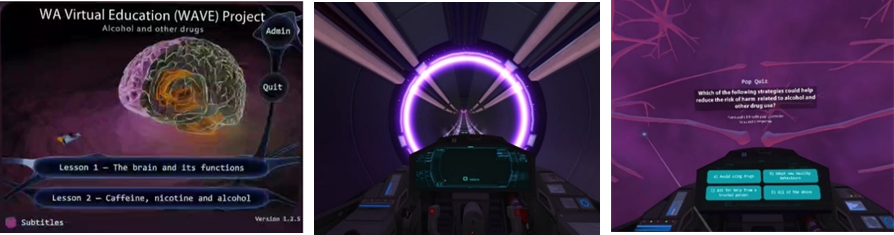
Caption: Screenshots from the virtual reality lessons
Lesson activities are designed for a 60-minute session, including a 15-minute virtual reality experience.
Activities can be adjusted to suit your school needs.
The resource will be available for schools to borrow during 2025. When you borrow the resource, you will receive:
- virtual reality headsets with controllers and charging accessories
- a ‘teacher resource’ package.
Evaluation outcomes
Twenty public and non-government schools in regional and metropolitan WA participated in the AOD Virtual Reality project from September to December 2023.
346 student survey responses were received across 20 schools. Results showed a high level of engagement with the delivery method.
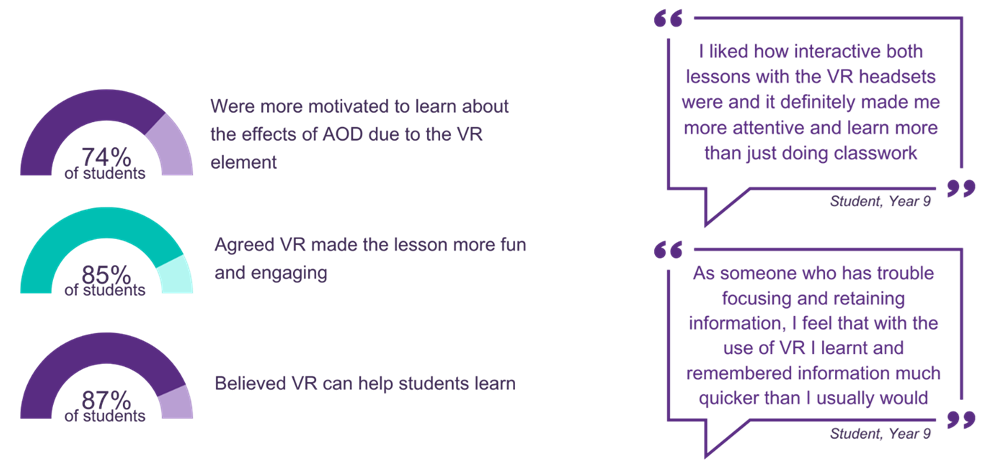
Caption: Results from the AOD Virtual Reality project student survey
Interviews were conducted with 20 teachers from 17 schools, from the Perth metropolitan and 3 regional areas.
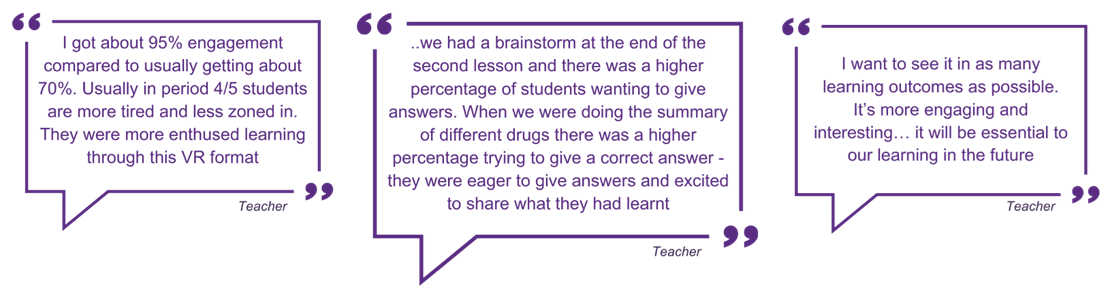
Caption: Results from the AOD Virtual Reality project teacher survey
Criteria for use
This resource is best used to complement existing AOD education.
Schools that incorporate the resource into their programs will be supported to inform parents and the school community, and to encourage conversations about alcohol and other drugs to extend learning beyond the classroom.
We can provide guidance on this as part of the resource package.
Contact
 Document
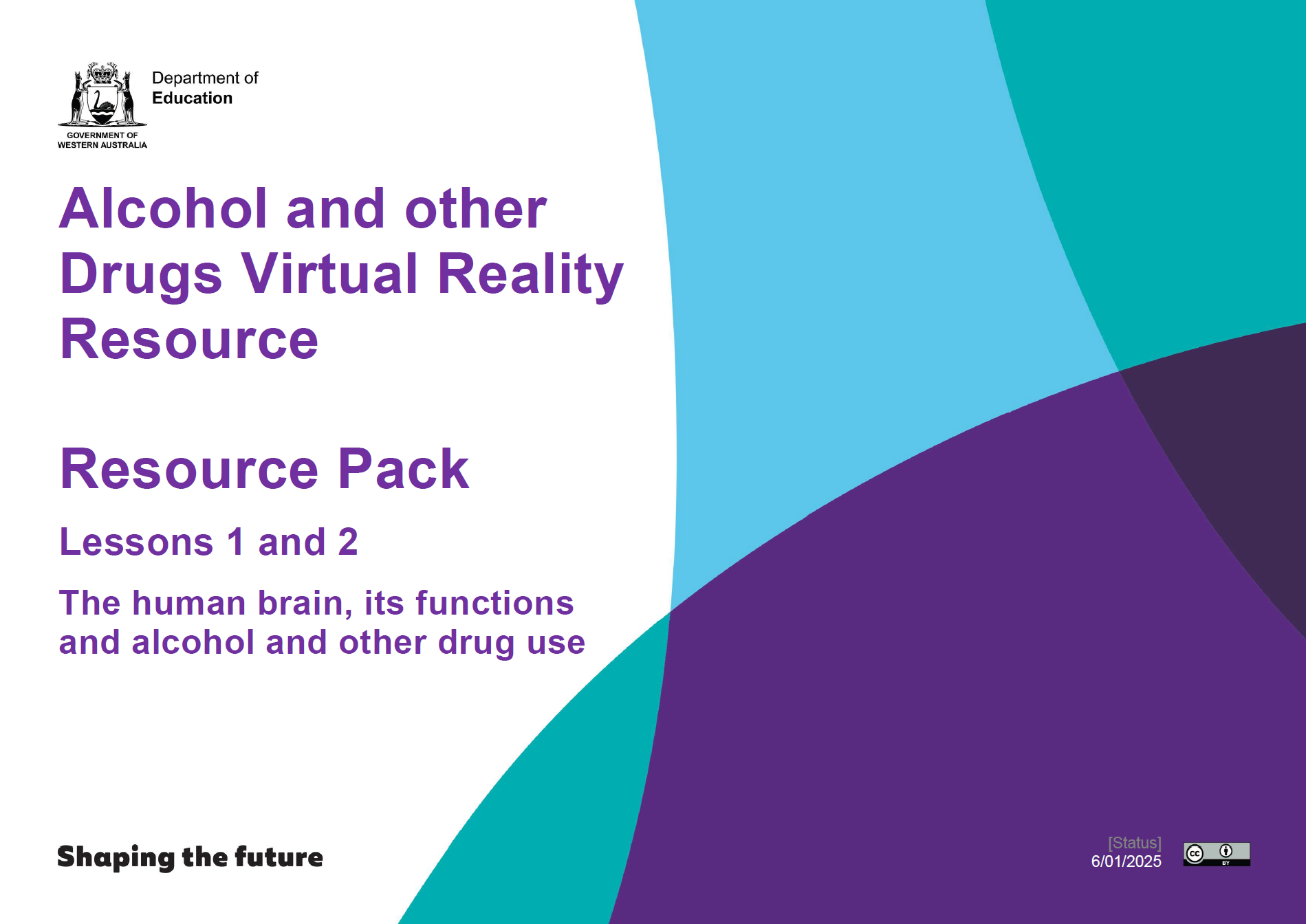
Virtual reality teacher resource pack - lessons 1 and 2
The teacher resource pack includes the classroom lesson overview and plans, as well as student activities and handouts.
 PDF
PDF
 Document
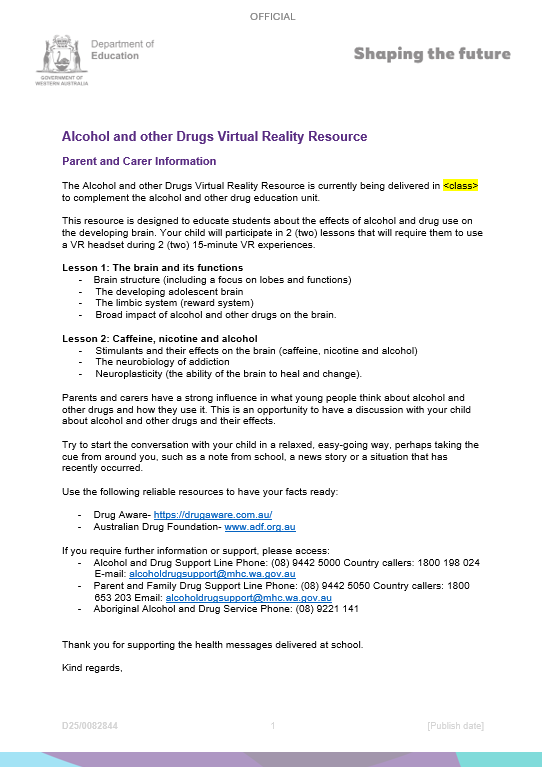
Virtual reality alcohol and other drugs parent and carer information
This document informs parents and carers about the Alcohol and Other Drugs Virtual Reality Resource being delivered in class and its purpose. It also encourages discussion at home about alcohol and other drugs and their effects on the developing brain.
 WORD
WORD
 Document
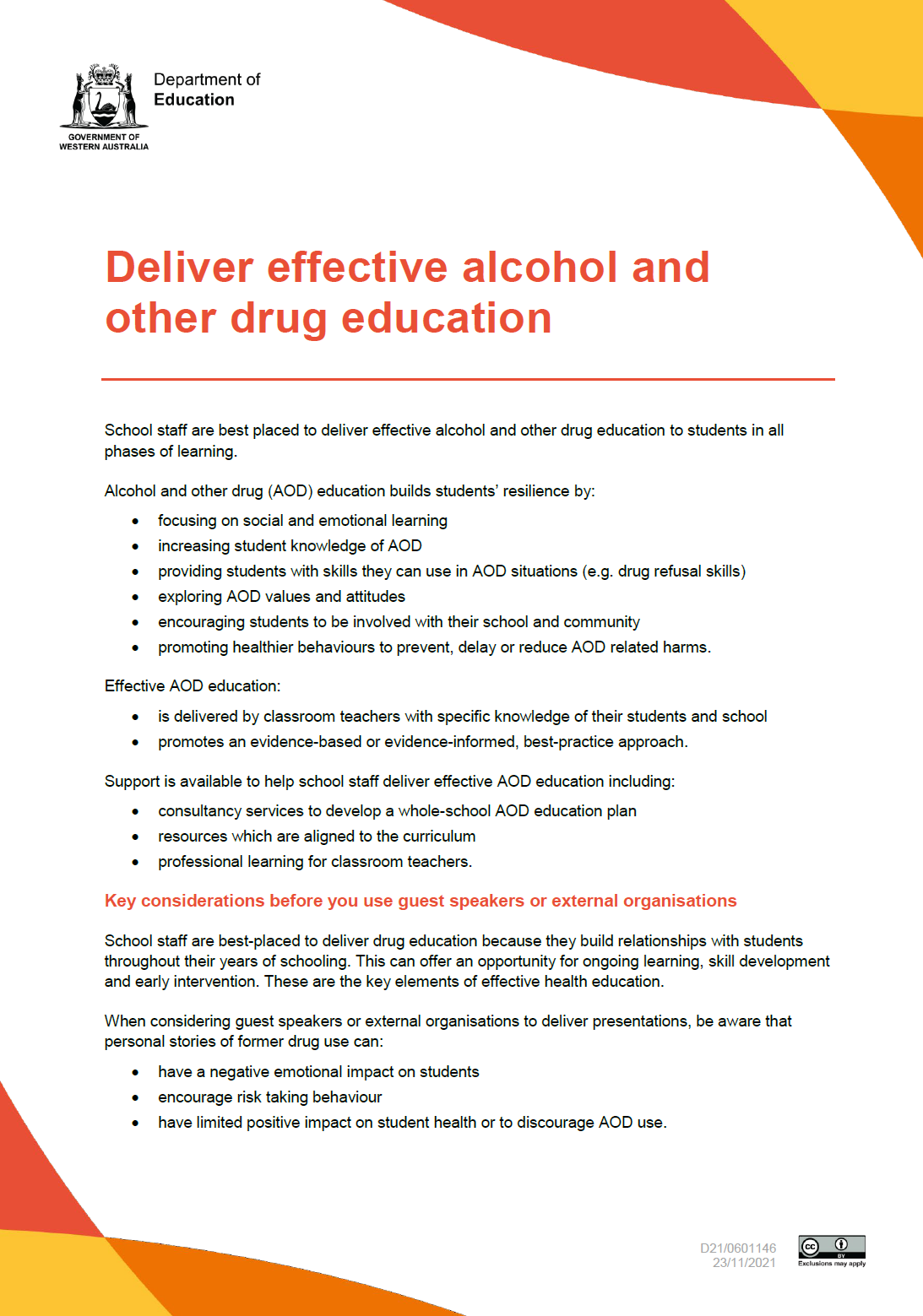
Delivering effective alcohol and other drug education – fact sheet
This document supports teachers to deliver effective, evidence-based alcohol and other drug education by outlining best-practice approaches, key considerations, and available supports. It guides schools in developing a whole-school alcohol and other drug education plan and making informed decisions about teaching strategies and the use of external presenters.
 Document
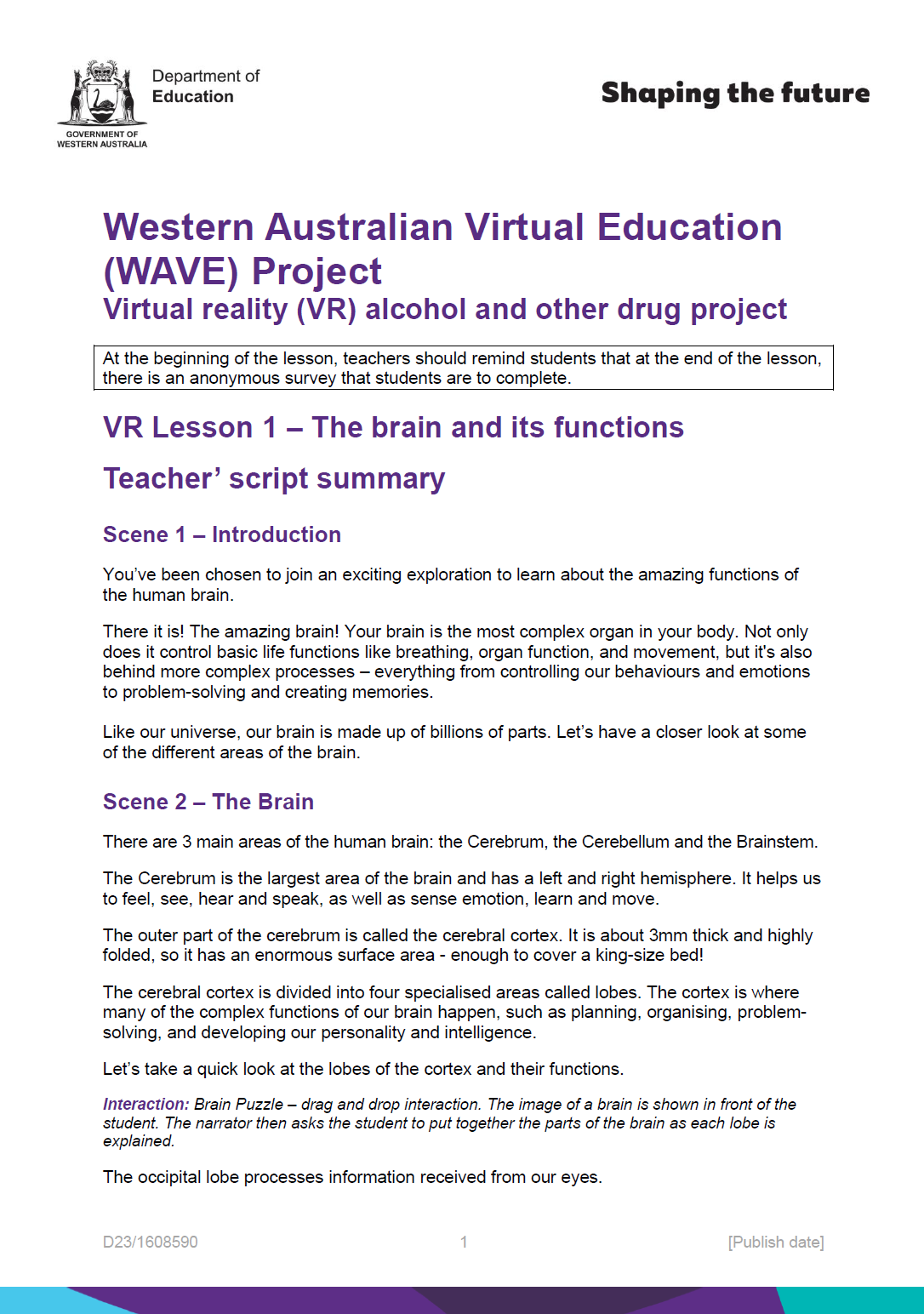
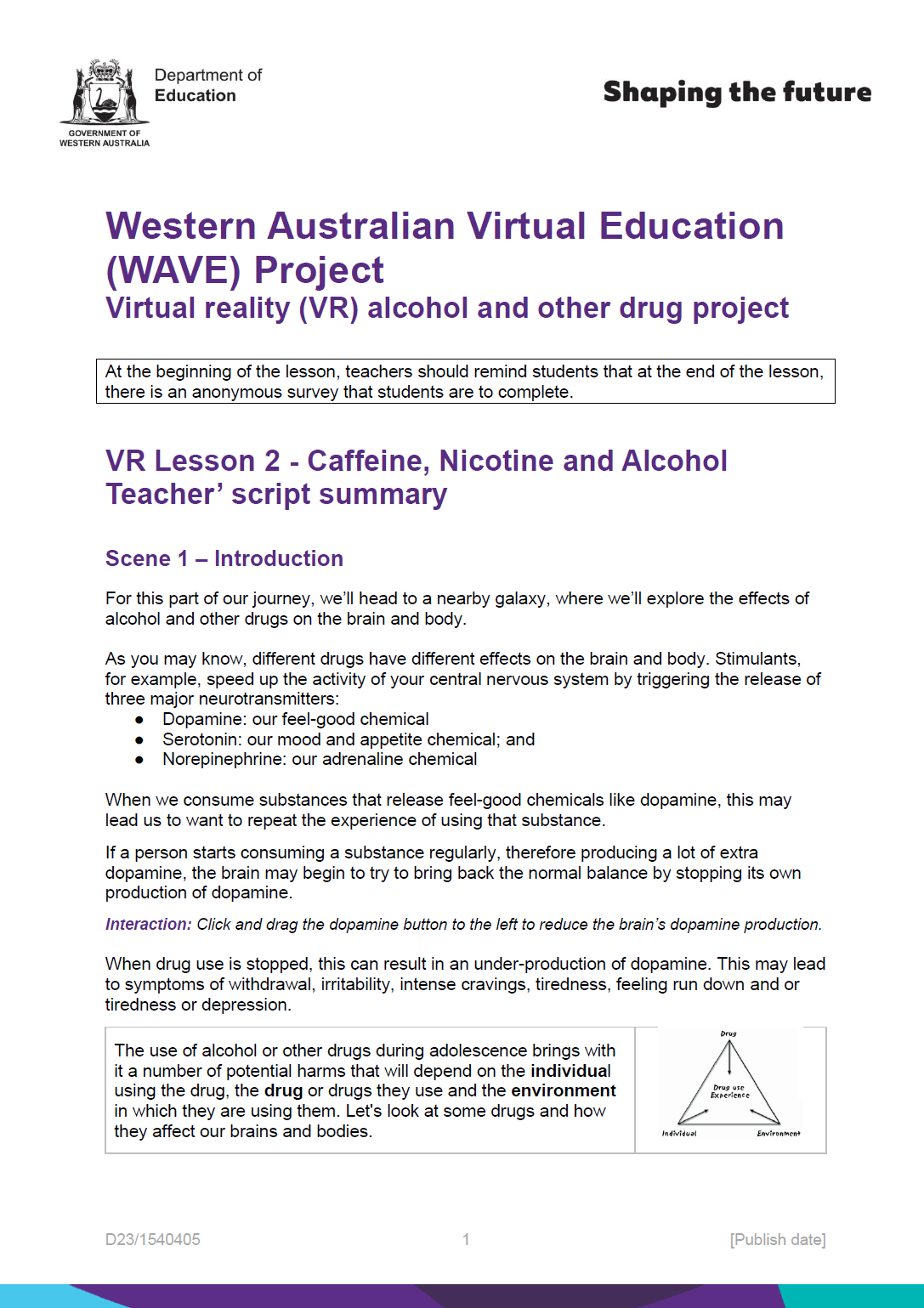
Virtual reality lesson 1 script summary
The purpose of providing the VR lesson script is to ensure accurate, consistent and age-appropriate delivery of content, while giving teachers clear insight into the material students will experience prior to delivery. It also supports transparency, review and approval in line with curriculum and evidence-based practice.
 Document
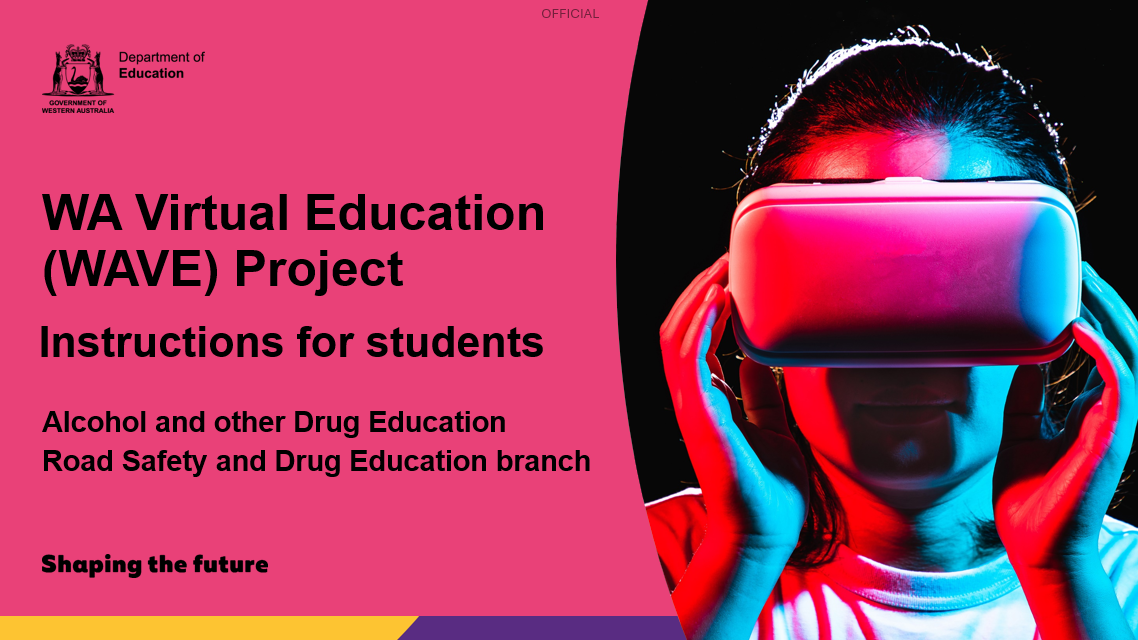
Virtual reality lesson 2 script summary
The purpose of providing the VR lesson script is to ensure accurate, consistent and age-appropriate delivery of content, while giving teachers clear insight into the material students will experience prior to delivery. It also supports transparency, review and approval in line with curriculum and evidence-based practice.
 Document
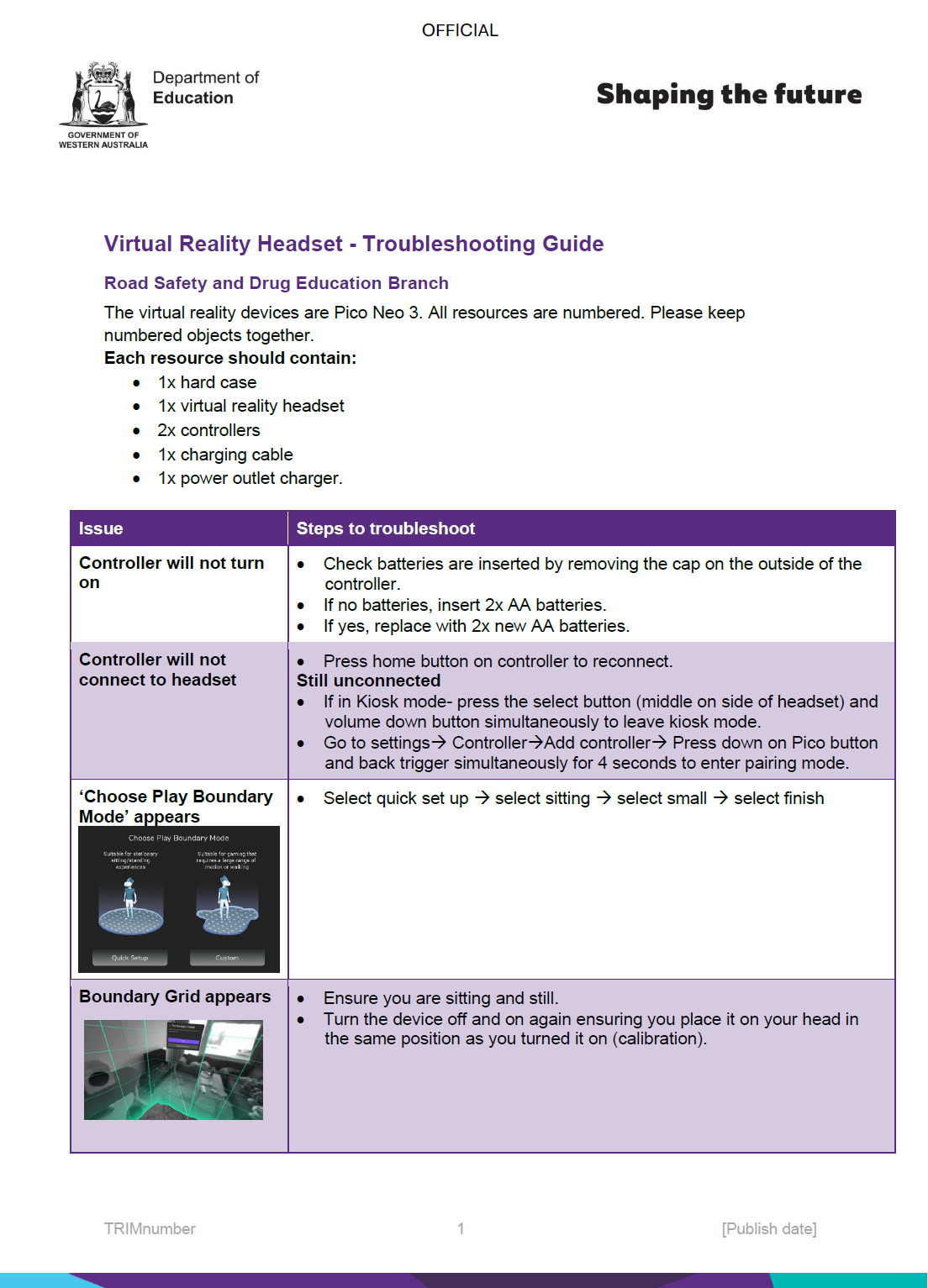
Virtual reality instructions for students
The PowerPoint is designed to prepare students to use the VR equipment safely and confidently by clearly explaining expectations, procedures, and safety requirements. It supports smooth lesson delivery and maximises student engagement and learning.
 PPTX
PPTX
 Document
Virtual reality headset troubleshooting
The troubleshooting guide is to support teachers in quickly identifying and resolving common VR headset issues during lessons. This helps minimise disruptions, ensures student safety, and supports smooth, effective delivery of the VR learning experience.